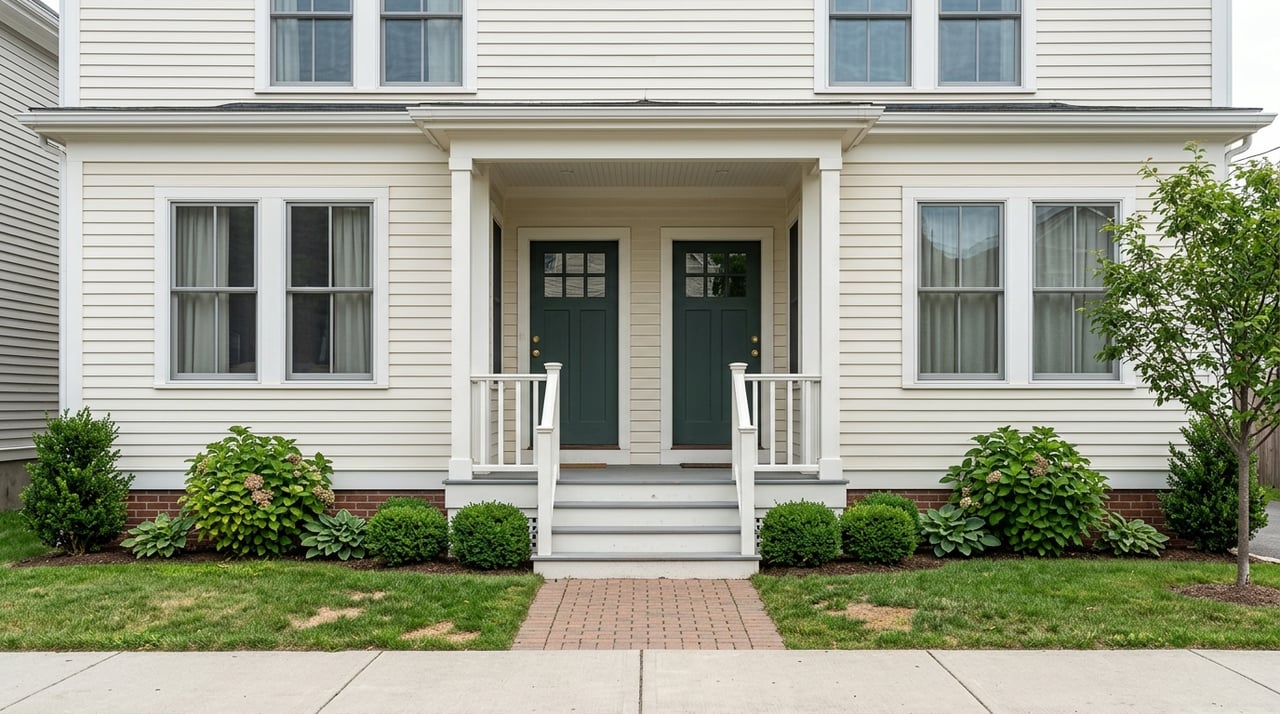
If you are looking at small multifamily property on the South Shore, Quincy and Weymouth often land on the same shortlist for good reason. Both offer commuter access, established housing stock, and a range of duplex to small multifamily opportunities, but they do not play the same way. If you want to compare where the better fit may be for your goals, this guide will help you understand the differences and what to check before you make a move. Let’s dive in.
Why Quincy and Weymouth stand out
Quincy and Weymouth are both commuter-oriented markets with similar travel times to work. According to U.S. Census QuickFacts, both communities post a mean travel time of 34.7 minutes, which helps explain their appeal for buyers and investors who want South Shore access with a practical commute.
The bigger difference is how each market is shaped. Quincy is larger and denser, with 103,434 residents and 6,132.6 people per square mile, while Weymouth has 60,159 residents and 3,426.0 people per square mile. That density, along with zoning and housing patterns, tends to make Quincy feel like the more renter-oriented option.
How the rental profile differs
If you are comparing long-term rental potential, Quincy and Weymouth show different fundamentals. Census data shows Quincy has a 45.2% owner-occupied rate and a median gross rent of $2,118, while Weymouth has a 67.4% owner-occupied rate and a median gross rent of $1,941. Based on that data, Quincy appears to be the more renter-heavy market, while Weymouth leans more toward owner occupancy.
Home values also differ. The same Census source reports a median owner-occupied home value of $618,500 in Quincy and $552,100 in Weymouth. In practical terms, Weymouth may offer a somewhat lower entry point, while Quincy may support a stronger rental thesis.
Where Quincy may fit better
Quincy is generally the more multifamily-friendly market at the zoning level. The city’s housing plan states that Quincy is an approved Housing Choice community and, as an MBTA-served municipality, must meet the state multifamily zoning requirement for MBTA communities.
That same plan notes that Residential B and Residential C districts allow single-family, duplex, and multifamily housing by right. Business A and Business B allow residential uses by special permit, while Business C is more flexible for mixed-use and higher-density residential forms. For buyers focused on small multifamily opportunities, that zoning structure can create more paths to viable inventory.
The plan also points to key areas within Residential B, including North Quincy, Wollaston, Quincy Center, and West Quincy. These locations are worth watching because they line up with the parts of Quincy where transit access, established housing, and multifamily patterns tend to intersect.
Quincy subareas to watch
If you are searching in Quincy, these subareas deserve extra attention:
- Quincy Center for transit-oriented housing patterns and access to the MBTA
- North Quincy for established density and commuter appeal
- Wollaston for a mix of residential stock and transit convenience
- West Quincy for opportunities within core residential districts identified in the city plan
Transit matters here too. The state notes that MassWorks funding supported transit-oriented development around Quincy Center MBTA Station, which reinforces Quincy’s position as a transit-connected market.
Where Weymouth may fit better
Weymouth can be a strong option if you want a more owner-occupied setting and are comfortable being more selective about zoning and location. The town’s zoning FAQ says the most common district is R-1, where detached one-family dwellings are the only permitted use. That means multifamily opportunities are not spread as broadly across the town.
Weymouth’s housing and zoning documents describe R-1 and R-2 as lower-density districts intended for single-, two-, and three-family structures, while R-3 and R-4 are intended to support higher-density multifamily development either by right or through the special-permit process. Some residential uses are also allowed in nonresidential districts.
For many buyers, this means Weymouth requires a more targeted search. Instead of assuming multifamily potential across broad areas, you will want to zero in on the districts and village-style centers where small multifamily housing is more likely to make sense.
Weymouth subareas to watch
On the Weymouth side, these areas are useful to track:
- Weymouth Landing/East Braintree for a walkable village center with commuter rail access
- East Weymouth for established residential housing stock
- South Weymouth for selected multifamily possibilities depending on district
- Columbian Square where housing and mixed uses cluster
Official town descriptions highlight Weymouth Landing and Columbian Square as places where housing, transit, and mixed uses come together. Weymouth also notes that the town has three commuter rail stations with travel times of about 30 to 35 minutes to South Station, adding practical value for owners and renters who prioritize access.
What to check in any listing
A promising listing is only promising if the existing use is legal and the property matches the public record. Before you assume a duplex can become a three-family, or a basement space can count as a legal unit, verify the basics.
Your first check should be the unit count and current use against zoning and assessor data. Quincy provides a public parcel and property record viewer, and Weymouth directs buyers to its Property Viewer for zoning and permitted-use review. Quincy also notes that its assessment process includes sale verification and cyclical inspections to confirm building size, layout, and related parcel details.
Key due diligence items
When reviewing a small multifamily listing in Quincy or Weymouth, pay close attention to:
- Zoning district and whether the existing use is allowed
- Assessor records to confirm unit count and building layout
- Parking requirements that may affect current or future use
- Lot area and frontage rules that can limit expansion or conversion
- Open-space standards that may affect additions or extra units
- Transit access if rental demand is part of your strategy
This matters because dimensional rules can shape what is actually feasible. Quincy's Residential B and C districts include dimensional and parking requirements that affect conversions and infill. In Weymouth, even R-2 remains a lower-density district with lot-area limits for added units, so you should not assume a third unit or expansion is legal without checking first.
How taxes and compliance affect the math
Small multifamily investing is not just about price and rent. Local taxes, sale requirements, and inspection processes can change your numbers and timing.
Quincy’s FY2026 residential tax rate is $11.78 per $1,000 of assessed value, while Weymouth’s FY2026 residential rate is $10.12. That is an important difference to factor into your annual carrying costs when you compare similar properties across the two communities.
There are also administrative details to know. Quincy says real estate abatements must be filed between January 1 and February 1, and the city may schedule property inspections as part of that process. Weymouth requires a smoke alarm certificate of compliance before a residential sale, valid for 60 days, and notes that multifamily inspections are scheduled by phone and cost $50 per unit.
Which market may fit your goals
If your priority is rental demand, denser housing patterns, and more multifamily-friendly zoning in core areas, Quincy may be the stronger fit. The city’s renter-heavy profile, higher median gross rent, and by-right multifamily zoning in Residential B and C support that case.
If your priority is a somewhat lower-value entry point in a more owner-occupied setting, Weymouth may be worth a closer look. You may just need to be more precise about where you search, especially in districts and village centers where small multifamily housing is more likely to align with zoning.
For many buyers, the real answer is not Quincy or Weymouth across the board. It is the right block, zoning district, and building configuration for your budget and plan. That is where local guidance can save you time and help you avoid costly assumptions.
If you are weighing duplexes, two-families, or other small multifamily opportunities in Quincy or Weymouth, Colleen Foulsham can help you compare inventory, review local market context, and focus your search on properties that fit your goals.
FAQs
What makes Quincy a stronger small multifamily market?
- Quincy has a more renter-heavy profile, higher median gross rent, and zoning districts where duplex and multifamily housing are allowed by right in key residential areas, according to Census data and the city housing plan.
What should you verify before buying a duplex in Weymouth?
- You should confirm the zoning district, legal unit count, assessor record details, and any lot, parking, or frontage limits before assuming the current or future use is allowed.
Which Quincy areas are worth watching for small multifamily property?
- Quincy Center, North Quincy, Wollaston, and West Quincy are useful subareas to track based on the city’s housing plan and transit-connected development patterns.
Which Weymouth areas may offer better small multifamily potential?
- Weymouth Landing/East Braintree, East Weymouth, South Weymouth, and Columbian Square are good areas to monitor because town materials describe them as places where housing, transit, and mixed uses cluster.
How do property taxes compare between Quincy and Weymouth?
- For FY2026, Quincy’s residential tax rate is $11.78 per $1,000 of assessed value, while Weymouth’s is $10.12, which can affect your annual ownership costs.
Why does transit access matter when comparing Quincy and Weymouth multifamily options?
- Transit access can support renter demand and commuter appeal, and both Quincy and Weymouth offer rail-connected locations with practical access to Boston.